
Why the freshness of the oils we eat and put on our skin matters—and how to recognize, prevent, and minimize exposure to rancid oils.
We pay attention to the ingredients in our food and personal care products. We look for natural ingredients, avoid unnecessary additives, and choose oils for their nutritional or skin-supporting properties. But there is another important consideration that is often overlooked: Even a beneficial oil can deteriorate with time, heat, light, and exposure to oxygen.
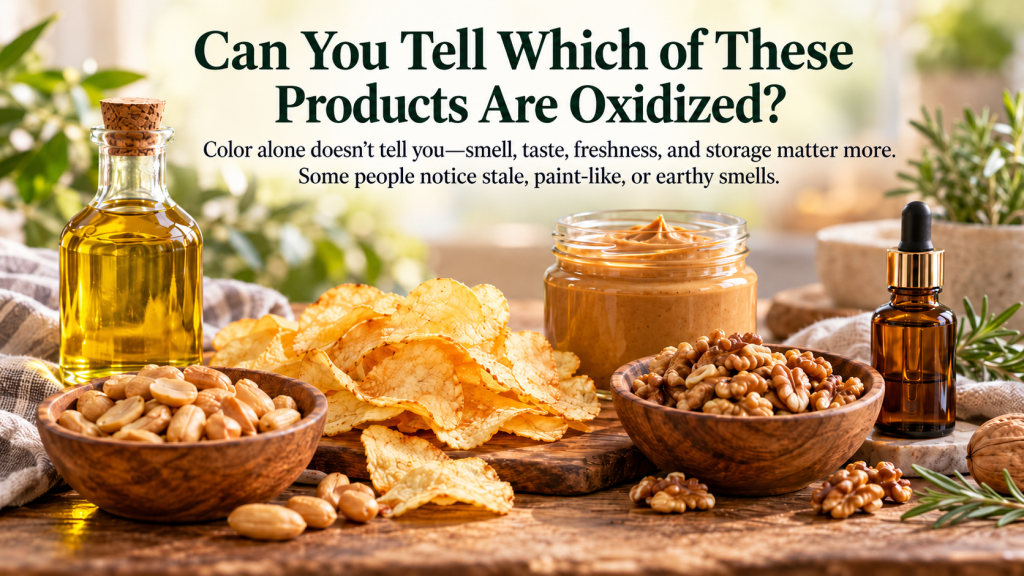
A bag of peanuts, a bottle of flaxseed oil, a package of potato chips, or a favorite natural facial serum may contain oils that have begun to oxidize. Sometimes the change is obvious. Other times it is surprisingly subtle.
Understanding oxidation can help us make better choices about which oils to use, how to store them, and when to discard them.
What Is Oil Oxidation?
Oxidation is a series of chemical reactions that occur when components of an oil react with oxygen. Heat, light, and certain metals can accelerate those reactions.
Fats are composed of fatty acids, which can be saturated, monounsaturated, or polyunsaturated. The degree of unsaturation is particularly important because carbon-carbon double bonds create opportunities for oxidation.
In general:
- Saturated fats are relatively resistant to oxidation.
- Monounsaturated fats are somewhat more susceptible.
- Polyunsaturated fats are generally the most susceptible, particularly those rich in omega-3 fatty acids.
During oxidation, oils initially form compounds known as lipid hydroperoxides. These can break down into secondary products, including aldehydes, ketones, and other substances that contribute to unpleasant tastes and odors.
Some of these breakdown products are biologically reactive, meaning they can interact with proteins, cell membranes, and other molecules.
The process is often called oxidative rancidity.
Not all rancidity develops through oxidation. Some fats also deteriorate through hydrolysis, which releases free fatty acids. This distinction matters because different oils and foods can develop unpleasant flavors for different reasons.
Which Oils Oxidize Most Easily?
Although individual formulations, processing methods, and antioxidant content can substantially influence stability, the following categories provide a useful general guide.
Oils with a higher susceptibility to oxidation
These oils deserve particular attention to freshness, packaging, and storage.
| Oil | Why it deserves attention |
|---|---|
| Flaxseed oil | Very high in omega-3 alpha-linolenic acid (ALA) |
| Fish oil | Rich in highly unsaturated EPA and DHA |
| Hemp seed oil | Contains substantial polyunsaturated fats |
| Walnut oil | High in polyunsaturated fatty acids |
| Grapeseed oil | Typically very high in linoleic acid |
| Conventional sunflower oil | Many varieties are high in linoleic acid |
| Safflower oil | Conventional varieties contain abundant polyunsaturated fats |
| Soybean oil | Contains both omega-6 and omega-3 polyunsaturated fats |
| Corn oil | High in omega-6 polyunsaturated fats |
| Pumpkin seed oil | Contains substantial linoleic acid |
| Wheat germ oil | Contains polyunsaturated fats, although naturally occurring vitamin E provides some protection |
These oils are not inherently unhealthy. In fact, several provide essential fatty acids that our bodies need.
The important distinction is between fresh, properly handled unsaturated oils and oils that have already undergone substantial oxidation.
Oils with moderate susceptibility
- Regular olive oil and extra virgin olive oil
- Avocado oil
- Peanut oil
- Sesame oil
- Canola oil
- Rice bran oil
- Almond oil
- Macadamia nut oil
- Sweet Almond Oil
These oils generally contain more monounsaturated fat, or possess natural antioxidant compounds that improve their resistance to oxidation.
Extra virgin olive oil, for example, contains polyphenols that help protect it from oxidative deterioration.
Peanut oil is relatively rich in monounsaturated fat, but the stability of peanuts themselves also depends on their fatty acid composition and storage conditions.
Oils and fats that are generally more resistant to oxidation
- Coconut oil
- Palm kernel oil
- Ghee (clarified butter)
- Cocoa butter
- Beef tallow
- Other highly saturated fats
- High-oleic sunflower oil
- High-oleic safflower oil
High-oleic oils are especially interesting. They are produced from varieties of oilseed plants selected for their high monounsaturated fat content, making them more resistant to oxidation than conventional versions of the same oils.
An important qualification: Oxidative stability is not the same thing as overall nutritional superiority. Highly saturated fats may resist oxidation better, but replacing unsaturated fats with large amounts of saturated fat can increase LDL cholesterol and cardiovascular risk. Freshness and nutritional composition should both factor into oil selection.
Everyday Foods That May Contain Oxidized Oils
Oil oxidation is not limited to bottles sitting in the pantry.
Some of our most familiar foods contain substantial quantities of oil and are exposed to conditions that encourage deterioration.
1. Peanuts and peanut butter
Peanuts are an excellent example of a food that can become rancid without looking particularly different.
They contain substantial quantities of fat, including both monounsaturated and polyunsaturated fatty acids. Processing, roasting, storage temperature, packaging, and exposure to oxygen all influence how quickly their oils deteriorate.
Signs of rancid peanuts may include:
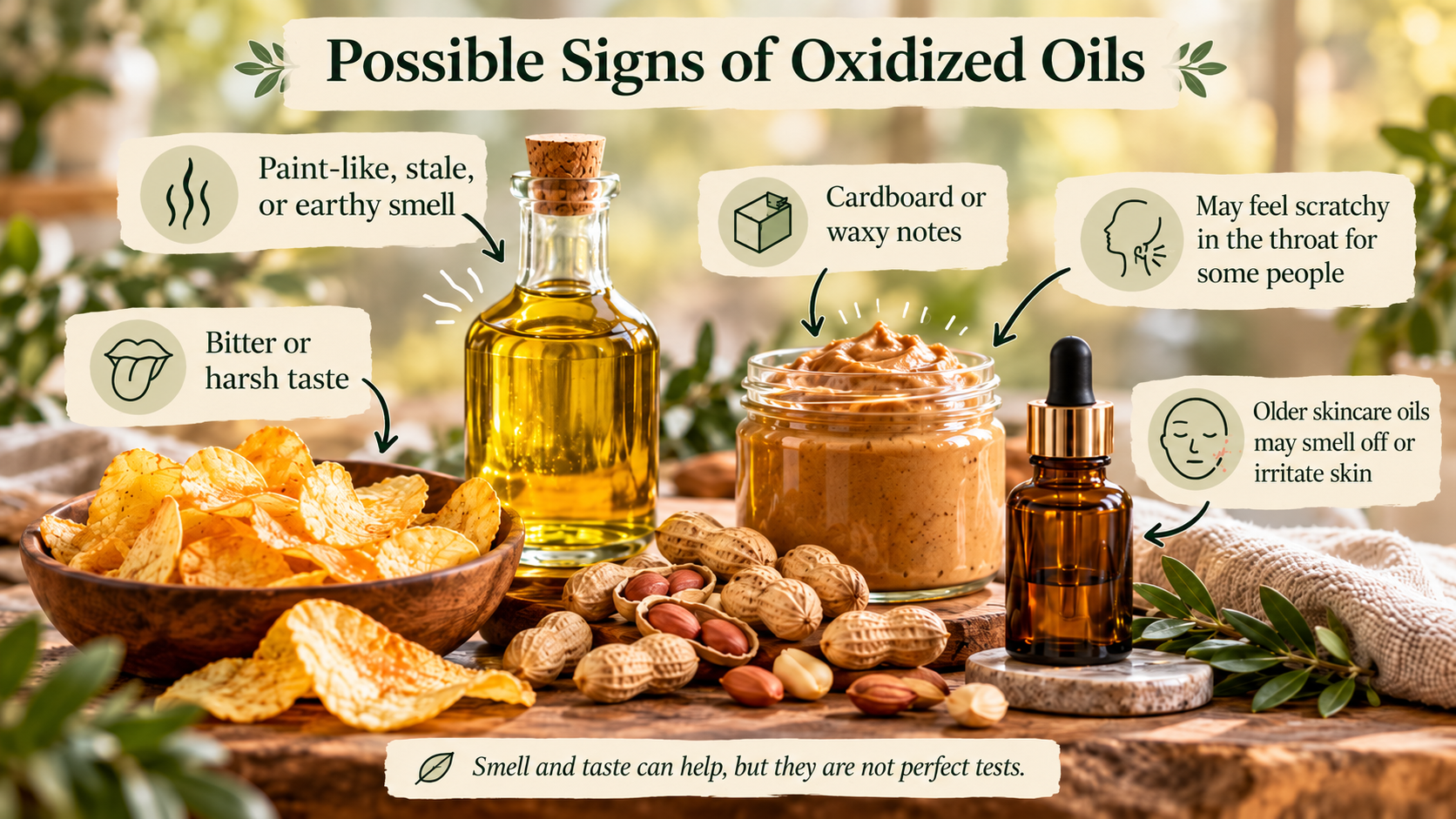
- A stale, paint-like, or cardboard-like odor
- An unpleasant bitter or sharp flavor
- A lingering aftertaste that seems different from normal roasted peanut flavor
- Loss of their characteristic fresh, nutty aroma
Natural peanut butter deserves particular attention because it may contain no added stabilizers, and the oil-rich portion can be exposed to air each time the jar is opened.
However, visible oil separation in natural peanut butter is normal and does not itself indicate rancidity.
For longer storage, refrigeration can help preserve freshness.
A separate concern with peanuts is mold contamination and aflatoxins. These are different from oil oxidation and cannot reliably be detected by taste or smell. Buy peanuts from reputable suppliers and discard products showing mold or unusual discoloration.
2. Potato chips
Potato chips may be one of the most overlooked sources of deteriorating oil in an ordinary kitchen.
They undergo several processes that can encourage oxidation:
- Exposure to high temperatures during frying.
- Contact with atmospheric oxygen during cooling and packaging.
- Extended storage after processing.
- Repeated exposure to air after opening.
Their relatively large surface area allows oil to come into contact with oxygen readily.
Fresh potato chips should have a pleasant potato-and-oil aroma, without stale, waxy, or paint-like notes.
When oxidation occurs, their flavor may become heavy, bitter, stale, or unpleasantly sharp.
The type of oil matters. Chips fried in high-oleic sunflower oil, for example, may be more oxidation-resistant than those fried in conventional sunflower oil under otherwise comparable conditions.
Packaging matters, too. Many manufacturers use nitrogen-flushed bags, which reduce oxygen exposure and help preserve freshness.
Potato chips have another processing-related concern: acrylamide, which forms from reactions involving sugars and amino acids during high-temperature cooking. Acrylamide formation is separate from oil oxidation.
3. Other foods worth watching
The following products may be susceptible to oxidative deterioration, especially with prolonged or improper storage:
- Walnuts, pecans, pine nuts, and other oil-rich nuts
- Sunflower seeds and pumpkin seeds
- Roasted peanuts and mixed nuts
- Nut butters
- Granola containing nuts or added oils
- Trail mixes
- Crackers containing vegetable oils
- Tortilla chips and other fried snack foods
- Popcorn made with oil
- Fried noodles and packaged snack mixes
- Whole-grain or wheat-germ-containing products
- Ground flaxseed and flaxseed meal
- Fried foods held for extended periods
- Fish oil and other omega-3 supplements
Whole flaxseeds have some natural protection from their intact seed coating. Once ground, however, more of their oil becomes exposed to oxygen.
For similar reasons, freshly ground nuts and seeds may lose quality faster than intact products.
The practical lesson: Check not only the ingredients, but also the age, packaging, and storage conditions of foods containing substantial amounts of unsaturated fat.
Nutritional Oils: When Freshness Is Especially Important
Some of the oils most valued for their nutritional benefits are also among the most vulnerable to oxidation.
Cod liver oil, fish oil, krill oil, and plant-based omega-3 supplements contain valuable fatty acids, but their chemical structures make them susceptible to deterioration when exposed to oxygen, heat, and light.
The same unsaturated fatty acids that make these oils nutritionally valuable also make careful storage and handling particularly important.
Which Nutritional Oils Oxidize Most Easily?
| Nutritional Oil | Oxidation Susceptibility |
|---|---|
| Cod liver oil | Very high |
| Fish oil | Very high |
| Algal DHA oil | Very high |
| Flaxseed oil | Very high |
| Krill oil | High |
| Hemp seed oil | High |
| Evening primrose oil | High |
| Borage seed oil | High |
| Black currant seed oil | High |
| Black seed oil | Moderate to high |
| Emu oil | Moderate |
| MCT oil | Low |
These are general assessments based primarily on fatty acid composition. Antioxidants, processing methods, packaging, and storage can substantially influence the stability of individual products.
Cod Liver Oil: A Particularly Important Example
Cod liver oil has a long history of use as a nutritional supplement. It provides the omega-3 fatty acids EPA and DHA, along with naturally occurring vitamins A and D.
EPA and DHA are highly polyunsaturated fatty acids, making them particularly vulnerable to oxidation.
As these fatty acids degrade, they can form lipid peroxides and secondary oxidation products, including aldehydes.
This doesn’t mean cod liver oil should be avoided. Rather, it emphasizes the importance of sourcing, freshness, and storage.
There are also meaningful differences between liquid oils and softgels.
Liquid cod liver oil: Each time a bottle is opened, fresh oxygen enters. Over time, repeated exposure can contribute to deterioration. Follow the manufacturer’s storage instructions, including refrigeration after opening when recommended.
Cod liver oil softgels: Encapsulation helps limit repeated oxygen exposure. Research has found that certain encapsulated omega-3 products maintain better oxidative stability than bottled liquids under comparable storage conditions.
However, capsules do not guarantee freshness. The quality of the original oil, encapsulation process, packaging, and storage conditions all remain important.
Can You Taste or Smell Oxidized Fish Oil?
Sometimes.
Fresh fish oil may naturally have a mild marine aroma. However, a strongly unpleasant fishy, stale, paint-like, or acrid odor may indicate deterioration.
Some people also notice a harsh or lingering aftertaste.
Flavored oils can make oxidation harder to recognize because citrus or other flavorings may mask changes in aroma or taste.
An oil that smells normal is not necessarily free of oxidation.
What about Fermented Cod Liver Oil?
There is a lot of controversy over this. On one side is the argument that this is a traditional food, and has helped many people. Confusing the issue is that fermented products are generally considered very healthy. On the other side is the argument that oils cannot ferment, only oxidize and go rancid. The oil is put into sealed drums and placed out in the sun for a period of time. It is undeniable that the oxidative process would start, but also that fairly quickly, there would be no oxygen to continue the process. There may be anaerobic bacterial activity which could possibly make the product more nutritious and healthy as the bacteria consumes the tiny bits of flesh in the oil. Undeniable is the fact that this activity will leave the characteristic elements of decay in the product. Our position on the matter is that it seems there is little to be gained in this process and it is better to consume the freshest oil possible which we think is made by Rosita.
How Manufacturers Evaluate Freshness
Responsible manufacturers may use laboratory measurements to evaluate oxidative deterioration.
Common tests include:
- Peroxide Value (PV): Measures certain primary oxidation products.
- p-Anisidine Value (pAV): Helps assess particular secondary oxidation products.
- TOTOX: Combines peroxide and anisidine measurements to estimate total oxidation.
Voluntary industry specifications commonly used for EPA- and DHA-containing oils include a maximum peroxide value of 5, a p-anisidine value of 20, and a TOTOX value of 26.
These tests have limitations, particularly for flavored or deeply colored oils. For example, lemon flavoring can interfere with p-anisidine measurements.
Consumers concerned about supplement freshness can look for manufacturers that perform appropriate batch testing and provide information about their quality-control standards.
How to Protect Nutritional Oils
- Purchase supplements from reputable manufacturers.
- Avoid products exposed to excessive heat or direct sunlight.
- Follow storage instructions, especially after opening.
- Keep softgels in their original protective packaging.
- Purchase quantities you can reasonably use before expiration.
- Avoid storing supplements in hot vehicles or humid bathrooms.
- Discard oils that develop distinctly unpleasant odors or flavors.
Oxidation does not automatically make every omega-3 supplement unsafe, nor does a small exposure to oxidized oil mean that harm has occurred.
Nevertheless, preserving freshness is one of the most sensible ways to protect the nutritional quality of these valuable oils.
What About Natural Skincare Products?
Oil oxidation matters for topical products as well as foods.
Natural skincare often relies on botanical oils that provide emollient properties, essential fatty acids, and other useful constituents.
Unfortunately, some highly valued skincare oils are also particularly susceptible to oxidation.
Skincare oils that may oxidize relatively quickly
- Rosehip seed oil
- Evening primrose oil
- Borage seed oil
- Hemp seed oil
- Flaxseed oil
- Grapeseed oil
- Unrefined walnut oil
- Certain seed-oil-rich botanical blends
Rosehip seed oil, for example, is often used in facial care because of its fatty acid composition. That same composition creates a need for careful storage and formulation.
More oxidation-resistant skincare ingredients
- Jojoba oil (technically a liquid wax ester)
- Squalane
- Fractionated coconut oil
- Coconut oil
- Cocoa butter
- Shea butter
- High-oleic sunflower oil
These ingredients are often useful when developing products intended for extended storage.
Jojoba and squalane are particularly attractive when oxidative stability is a major concern.
However, a completed skincare formula may contain multiple oils, fragrances, antioxidants, and other ingredients. Its stability must be evaluated as a whole.
Essential oils present a related concern
Essential oils are chemically different from the fatty oils discussed above. They consist largely of volatile aromatic compounds rather than triglycerides.
Nevertheless, many essential-oil constituents also oxidize when exposed to air.
For example, limonene and linalool, which occur in numerous aromatic oils, can form oxidation products that are more likely to cause allergic skin reactions than the original compounds.
Citrus oils and essential oils rich in certain monoterpenes deserve particular attention to proper storage.
Oxidized essential oils may develop an altered, harsh, flat, or otherwise unusual aroma, but a normal smell does not guarantee that the oil has not oxidized.
If an old essential oil begins causing irritation, discontinue its use rather than attempting to dilute away the problem.
Also remember that microbial contamination is a separate issue, especially in water-containing natural skincare products. Antioxidants cannot substitute for an appropriate preservative system.
What Happens When We Consume Oxidized Oils?
Our bodies have sophisticated systems for handling reactive molecules and managing oxidative stress.
These include antioxidant enzymes, glutathione-dependent processes, and repair and disposal mechanisms that help limit cellular damage.
However, highly oxidized fats can contain reactive compounds that present additional challenges.
1. Increased exposure to reactive aldehydes
During oxidation, polyunsaturated fatty acids can break down into compounds such as:
- 4-hydroxynonenal (4-HNE)
- 4-hydroxyhexenal (4-HHE)
- Malondialdehyde (MDA)
- Acrolein
- Other reactive aldehydes
These molecules can interact chemically with proteins, lipids, and DNA.
Laboratory and animal studies demonstrate that certain lipid oxidation products can contribute to cellular injury and inflammatory signaling.
The extent to which ordinary dietary exposure causes specific long-term diseases in humans, however, remains less certain.
2. Oxidative stress and inflammation
Oxidative stress occurs when the production or exposure to reactive molecules exceeds the body’s ability to control them effectively.
Persistent oxidative stress has been associated with inflammation, cardiovascular disease, and other chronic health conditions.
Oxidized lipids can participate in these processes, but it would be misleading to claim that eating an occasional stale peanut or rancid chip causes those diseases.
The consequences depend on the compounds present, the amount consumed, the frequency of exposure, and the body’s capacity to metabolize and eliminate them.
3. Effects on cellular membranes and proteins
Healthy cell membranes contain lipids that are essential for their structure and function.
Reactive lipid oxidation products can interact with membrane components and proteins, potentially altering cellular processes.
This is one reason scientists study lipid peroxidation in aging and disease.
An important distinction is that oxidative damage occurring inside the body is not identical to ingesting an oxidized oil. Digestion, absorption, metabolism, and detoxification processes influence what ultimately reaches our tissues.
4. Loss of nutritional quality
A simpler and better-established consequence of oxidation is that it reduces the quality of the oil itself.
Oxidation can destroy valuable fatty acids, degrade naturally occurring antioxidants, and produce unpleasant flavors.
A badly oxidized fish oil supplement, for instance, may no longer provide the same nutritional quality as a fresh, properly stored product.
5. Digestive and respiratory irritation
Strongly degraded oils may cause unpleasant digestive symptoms in some people.
Overheated cooking oils can also release irritating airborne compounds, including acrolein and other aldehydes. Inhaling cooking fumes is a separate exposure pathway from eating oxidized food.
Proper kitchen ventilation is particularly important during frying.
How Can You Tell Whether an Oil Has Oxidized?
Fortunately, our senses provide several useful warning signs.
Unfortunately, they are not perfect instruments.
Smell: often the first warning
Fresh oils have characteristic aromas that vary by source.
Olive oil might smell grassy or fruity. Fresh walnut oil has a pleasant nutty aroma. Fresh peanuts smell distinctly like peanuts.
Oxidized oils may instead smell:
- Like old paint or varnish
- Like crayons or wax
- Like cardboard or stale packaging
- Metallic or chemical-like
- Musty or stale
- Excessively fishy, especially in fish oil
- Sour or unpleasantly sharp
A familiar example is opening an old container of nuts and noticing that something smells wrong even though the nuts look normal.
Some oils develop these odors well before substantial visible changes occur.
Taste: bitterness, sharpness, and lingering unpleasantness
Rancid oils can develop flavors that are markedly different from their fresh versions.
Possible signs include:
- Unusual bitterness
- A stale or waxy flavor
- An unpleasant metallic note
- A chemical or paint-like aftertaste
- A lingering acrid sensation
- A loss of the pleasant flavor normally associated with the food
These changes may be especially noticeable in nuts, potato chips, crackers, and oils consumed without cooking.
If a food tastes suspicious, do not keep sampling it to determine whether it is safe.
Can oxidized oils irritate your throat?
Some people describe an unpleasant scratchy, acrid, burning, or harsh sensation in the back of the throat when consuming stale oils or oil-containing foods.
This is biologically plausible because certain chemical irritants can stimulate sensory nerves in the mouth and throat.
However, throat irritation has not been validated as a reliable test for lipid oxidation.
In particular, two experiences should not be confused.
Fresh, high-quality extra virgin olive oil can produce a peppery sensation or even provoke a cough. This is associated with phenolic compounds, especially oleocanthal, and is not evidence of rancidity.
A stale, unpleasantly chemical flavor accompanied by throat irritation is more concerning when it represents a change from the product’s normal characteristics.
Throat symptoms can also result from spices, acidity, reflux, allergies, or other causes. Significant swelling, wheezing, or difficulty breathing after consuming a food should be treated as a possible allergic or medical emergency, not merely rancidity.
Appearance and texture
Appearance is less reliable than smell or flavor, but certain changes can indicate deterioration:
- Unexpected darkening
- Unusual thickening
- Sticky or gummy residue
- Changes in color
- Unexpected sediment or cloudiness
Keep in mind that olive oil and coconut oil can naturally become cloudy or solidify at cooler temperatures. This alone does not mean the oil is spoiled.
Similarly, natural peanut butter commonly separates into a solid layer and an oil layer.
What if an oil smells normal?
An oil can undergo early oxidation before obvious sensory changes appear.
Manufacturers and laboratories may evaluate oxidation using tests such as peroxide value (PV), anisidine value (AV), and combined measures such as TOTOX.
For oils intended for nutritional supplements, these measurements can provide useful quality information beyond a simple smell test.
Consumers may wish to look for companies that perform batch testing, particularly when purchasing expensive omega-3 supplements.
How to Prevent or Slow Oil Oxidation
The most useful strategy is to limit the conditions that accelerate oxidation.
Four factors deserve particular attention: oxygen, heat, light, and time.
Keep oxygen exposure low
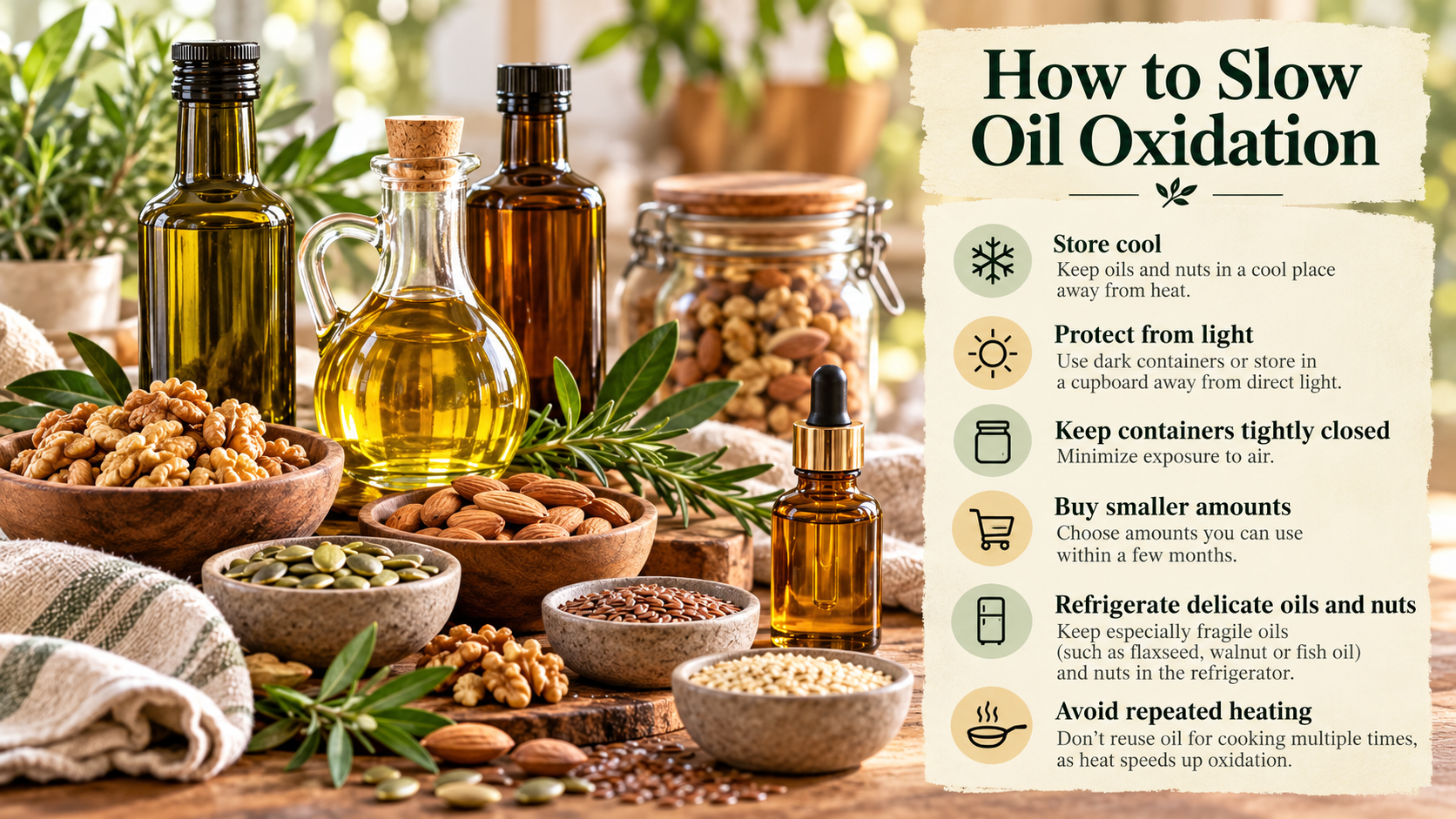
- Close bottles and jars immediately after use.
- Choose smaller containers when an oil is used infrequently.
- Avoid repeatedly opening bulk containers.
- Use packaging that limits oxygen transmission.
- For homemade products, avoid introducing unnecessary air during preparation.
Manufacturers may use nitrogen flushing or other oxygen-control techniques to preserve oil-containing products.
Protect oils from heat
Store oils away from stovetops, windows, heaters, and other heat sources.
Heat accelerates oxidation, even when temperatures are far below an oil’s smoke point.
Highly unsaturated specialty oils such as flaxseed and hemp seed oil are generally better suited to cold applications than high-temperature frying.
Avoid repeatedly heating cooking oil, and discard oil that has become excessively dark, foamy, smoky, or unpleasant-smelling.
Protect oils from light
Light can accelerate oxidation, particularly in oils containing photosensitive compounds.
Dark glass bottles, opaque packaging, and closed cupboards offer useful protection.
A beautiful clear bottle of specialty oil displayed beside a sunny kitchen window may be an attractive decoration, but it is not an ideal storage arrangement.
Refrigerate or freeze vulnerable foods
Refrigeration can meaningfully extend the useful life of many nuts, seeds, and delicate oils.
Some practical examples:
- Store flaxseed and many specialty nut oils in the refrigerator according to their labels.
- Refrigerate opened natural nut butters when recommended by the manufacturer.
- Store bulk walnuts and other oil-rich nuts in the refrigerator or freezer.
- Keep ground flaxseed tightly sealed and cold.
- Follow supplement manufacturers’ instructions for storing fish oils.
Frozen nuts and seeds can retain quality much longer than those stored in a warm pantry.
For most oils, the optimal storage condition depends on their composition and packaging; refrigeration is not universally required.
Consider antioxidants in product formulation
Antioxidants can interrupt or slow some oxidation reactions.
Common examples used in food or cosmetic formulations include:
- Mixed tocopherols (vitamin E compounds)
- Rosemary extract
- Ascorbyl palmitate
- Certain naturally occurring plant polyphenols
- Other approved antioxidant ingredients
Their effectiveness depends on the product’s composition, concentration, processing, and packaging.
Antioxidants help delay oxidation; they do not reliably restore an already rancid oil.
Adding vitamin E to an old, unpleasant-smelling facial oil, for example, does not make the degraded oil fresh again.
What Should You Do If You Have Already Consumed Oxidized Oils?
Perhaps you opened a bag of peanuts, ate a handful, and only afterward noticed the stale, acrid aftertaste.
Or you discovered that a bottle of cooking oil had gone rancid after using it to prepare a meal.
Is there anything you can do to counteract the effects?
First, put the exposure in perspective
An occasional small exposure to rancid food is unlikely to cause serious harm in an otherwise healthy person.
Much of the concern about oxidized oils centers on repeated exposure, particularly to substantially degraded oils.
The body already possesses systems that metabolize reactive compounds, neutralize some oxidation products, and repair cellular damage.
There is no well-established antidote or supplement protocol that reverses the effects of consuming rancid dietary oil.
Stop consuming the product
If an oil or food is noticeably rancid, discard it.
Do not attempt to rescue it through heating, filtering, blending with fresh oil, or adding antioxidants.
Even if those measures improve the flavor, they do not necessarily remove potentially undesirable oxidation products.
Support your normal antioxidant defenses through diet
A nutritious diet supplies compounds involved in maintaining the body’s antioxidant systems.
Useful foods include:
- Colorful vegetables, including leafy greens, broccoli, and peppers
- Berries and other antioxidant-rich fruits
- Citrus fruits and other vitamin C sources
- Nuts and seeds that are fresh and properly stored
- Legumes and whole foods containing essential minerals
- Extra virgin olive oil as part of a balanced eating pattern
These foods support long-term health, but none has been demonstrated to specifically neutralize a recently consumed dose of rancid oil.
What about antioxidant supplements?
Vitamin C, vitamin E, selenium, glutathione-related nutrients, and various botanical compounds are frequently discussed in connection with oxidative stress.
There are sound biochemical reasons for studying these substances.
Vitamin E, for example, helps protect cell membranes against lipid peroxidation. Vitamin C participates in antioxidant recycling, while selenium is required for the function of several antioxidant enzymes.
However, this does not mean that taking large doses of these nutrients after eating oxidized oil reverses any damage.
Clinical research has not established such a treatment.
High-dose antioxidant supplementation can also carry risks, and large studies have generally failed to demonstrate that routine high-dose vitamin E or beta-carotene supplements prevent cardiovascular disease or cancer.
The more defensible approach is to maintain adequate nutrient intake through a balanced diet rather than attempt an aggressive antioxidant “detox.”
What about drinking water or fasting?
Normal hydration is important for health, particularly if someone experiences digestive upset.
However, drinking large amounts of water does not directly flush oxidized fats from the body.
Similarly, there is no good evidence that fasting, laxatives, cleansing regimens, or other detoxification protocols eliminate dietary lipid oxidation products more effectively.
If a suspicious food causes persistent vomiting, significant abdominal pain, or other concerning symptoms, seek appropriate medical advice rather than assuming the problem is simply rancidity.
A Few Practical Habits That Make a Difference
Preventing unnecessary exposure to oxidized oils does not require eliminating every food that contains unsaturated fat.
A few simple habits can make a meaningful difference:
- Buy smaller quantities of delicate oils. A smaller bottle used while fresh is preferable to a large bottle stored for months.
- Pay attention to nuts and seeds. Their natural oils can deteriorate even when they look perfectly normal.
- Check potato chips and other oil-rich snacks for stale flavors. Packaging and storage matter.
- Use delicate oils for appropriate applications. Reserve highly unsaturated oils for cool or low-temperature uses when recommended.
- Keep oils away from heat and sunlight. Cool, dark storage is a simple but valuable practice.
- Refrigerate vulnerable products. Especially flaxseed oil, some nut oils, and bulk nuts or seeds.
- Inspect older skincare products. Pay attention to aroma, color, consistency, and any new irritation.
- Choose suppliers that prioritize freshness and testing. This is especially important for fish oil and other highly unsaturated supplements.
- Discard products that seem rancid. The small financial loss is preferable to repeatedly using a degraded product.
- Avoid excessive fear of healthy fats. Fresh unsaturated oils, nuts, and seeds can be valuable parts of a nutritious diet.
The Bottom Line: Freshness Matters
The conversation about dietary oils often focuses on whether a particular fat is saturated, monounsaturated, or polyunsaturated.
Those differences are important, but they are not the whole story.
An oil’s quality also depends on how it was produced, packaged, transported, stored, and used.
A fresh oil and a heavily oxidized version of that same oil are not chemically identical products.
Choosing appropriate oils, protecting them from oxygen, heat, and light, and learning to recognize changes in smell and taste can help preserve the quality of the foods, supplements, and natural skincare products we use.
And perhaps most importantly, we do not need an elaborate detoxification strategy every time we encounter a stale snack.
The best approach is prevention: choose quality oils, keep them fresh, and know when it is time to replace them.
Scientific References and Further Reading
- Wang D. et al. (2023). Lipid oxidation in food science and nutritional health: A comprehensive review. Oil Crop Science. Read the review.
- Zhao M. et al. (2025). Advance in aldehydes derived from lipid oxidation: A review of the formation mechanism, attributable food thermal processing technology, analytical method and toxicological effect. Food Research International. PubMed.
- Scianò F. et al. (2025). Toxic aldehydes in cooking vegetable oils: Generation, toxicity and disposal methods. Food Chemistry: X. Full text.
- Albert B.B. et al. (2013). Oxidation of Marine Omega-3 Supplements and Human Health. BioMed Research International. Full text.
- National Center for Complementary and Integrative Health. Antioxidant Supplements: What You Need To Know. National Institutes of Health. Read the NIH guidance.
- U.S. Food and Drug Administration. Acrylamide and Diet, Food Storage, and Food Preparation. FDA consumer information.
- Essential Oils as Natural Sources of Fragrance Compounds for Cosmetics and Cosmeceuticals (2021). Molecules. Full text.
- University of Connecticut Extension. Heart Healthy Cooking Oils. Cooking oil composition and storage guidance.
Educational information only. This article is not intended to diagnose, treat, cure, or prevent disease. Consult a qualified healthcare professional regarding persistent symptoms or individual health concerns.


Join the conversation!