
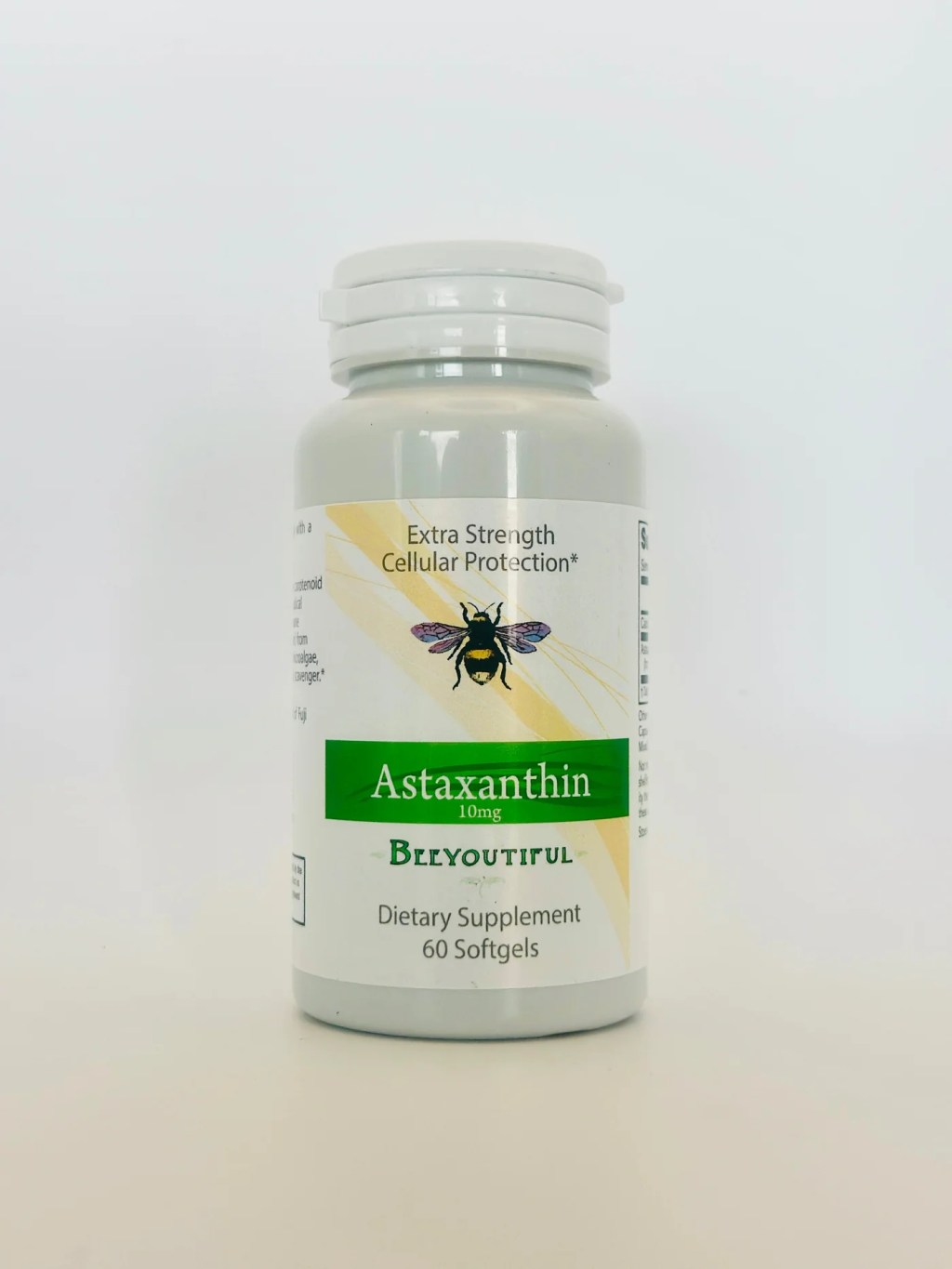
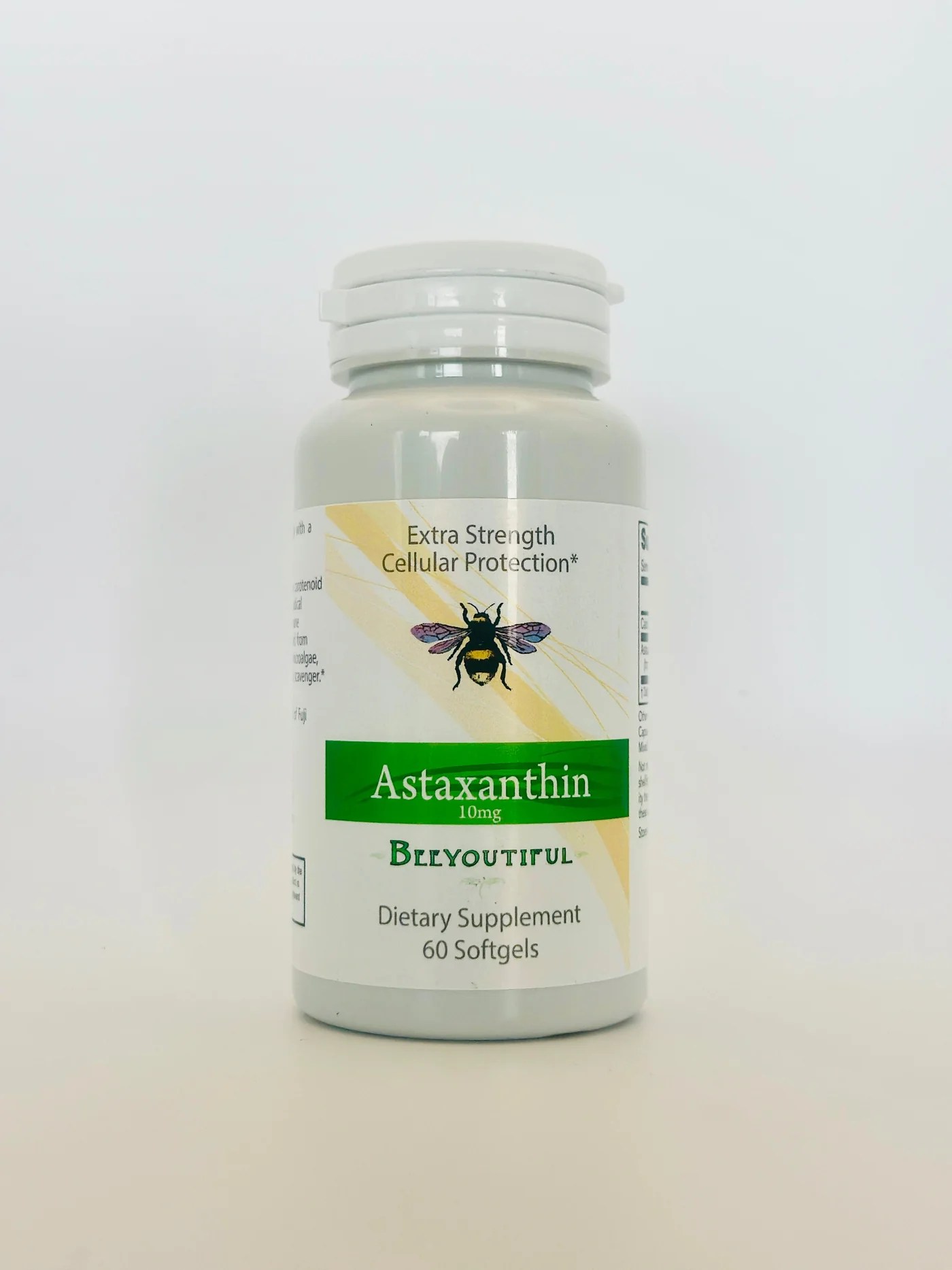
Why We Added Astaxanthin
As I’ve gotten more serious about healthy aging, I’ve found myself paying more attention to supplements that aren’t necessarily designed to make you feel something immediately. Some supplements are obvious. You take them because you’re trying to accomplish one particular thing.
Astaxanthin is different.
It kept coming up while I was researching several things I was interested in at the same time: healthy aging, exercise and recovery, eye health, skin and sun exposure, and the cumulative effects of oxidative stress. And at first I wasn’t even entirely sure what it was. Then I learned that astaxanthin is one of the pigments responsible for the distinctive reddish-pink color of salmon, shrimp, lobster, and other marine animals. That got my attention. The animals don’t actually manufacture much of it themselves. Astaxanthin originates lower down the food chain, particularly in microalgae. One of its richest natural sources is the freshwater microalga Haematococcus pluvialis, which is also the source of the astaxanthin in our new Astaxanthin 10 mg Softgels.
The more research I read, the more interesting it became. I also started taking it myself around the same time I added Masculine Edge. As I mentioned when I wrote about that product, my wife subsequently noticed more vigor and asked whether I had changed anything. Since I had added two supplements, I can’t honestly separate what came from what—or say that either supplement necessarily caused what we noticed. And that is exactly why I wanted to look beyond my own experience and dig into the research.
So, What Exactly Is Astaxanthin?
Astaxanthin is a carotenoid, the same broad family of naturally occurring pigments that includes beta-carotene, lutein, and zeaxanthin. More specifically, it’s a reddish-orange carotenoid known as a xanthophyll. In nature, microalgae produce astaxanthin. Small organisms eat the algae, larger animals eat those organisms, and eventually the pigment works its way up the food chain. That’s why salmon flesh is pink and why shrimp and lobster turn that characteristic reddish color.
Our Astaxanthin provides:
10 mg of natural astaxanthin from Haematococcus pluvialis extract per softgel.
That 10 mg dose is useful because it falls right in the neighborhood of doses used in quite a few human clinical studies. But the reason researchers are interested in astaxanthin isn’t its color. It’s what its molecular structure allows it to do.
Free Radicals, Oxidative Stress, and Why Antioxidants Matter
We tend to talk about “free radicals” as though they’re foreign invaders attacking the body. They’re not quite that simple. Your body naturally produces reactive oxygen species during normal metabolism. Exercise produces them. Immune activity can produce them. Environmental exposures can contribute to them. And reactive oxygen species aren’t universally bad. The body actually uses some of them as signaling molecules.
The problem is balance. When the production of free radicals and other reactive oxygen species exceeds the body’s ability to neutralize them with antioxidants, things are out of balance. We call that oxidative stress. Over time, this imbalance can damage cellular membranes, proteins, and DNA, impair normal cell function, and contribute to chronic inflammation. Oxidative stress has been associated with accelerated aging and with the development or progression of numerous chronic conditions, including cardiovascular disease, neurodegenerative disorders, metabolic dysfunction, and certain cancers. Because oxidative damage can accumulate gradually, supporting the body’s antioxidant defenses through a nutrient-rich diet and other healthy lifestyle practices may help protect cells and tissues from long-term damage.When production of reactive compounds exceeds the body’s ability to manage them, we call that oxidative stress. That can affect lipids, proteins, DNA, and cell structures. Antioxidants participate in the body’s systems for keeping that chemistry in balance.
Astaxanthin is particularly interesting because of its molecular structure. Portions of the molecule interact with the lipid portion of cell membranes while other portions can interact closer to the membrane surface. That’s one reason it has attracted so much attention in antioxidant research.
But laboratory chemistry isn’t enough for me. The important question is:
Does taking astaxanthin actually do anything measurable in humans?
There, the answer gets interesting.
What Does the Human Research Say?
Oxidative Stress: Probably the Best Place to Start
A systematic review and meta-analysis looked at 12 randomized controlled trials involving 380 participants. Researchers found that astaxanthin supplementation significantly reduced blood concentrations of malondialdehyde, or MDA, one commonly used marker of lipid oxidative stress. Not every oxidative or inflammatory marker changed consistently, which is important. The evidence doesn’t support the idea that astaxanthin magically suppresses every measurable marker of oxidative stress. But taken as a whole, the human evidence does support a real antioxidant effect rather than the claim existing only in a laboratory dish.
A newer 2026 meta-analysis specifically examined exercise-related oxidative stress. Seven randomized trials involving 188 participants found a significant reduction in one marker of protein oxidation, while several other markers did not significantly change. Again, that’s not a miracle-product story. It’s a much more believable one:
Astaxanthin appears to influence some measures of oxidative stress in humans, while the magnitude and consistency depend on what is being measured.
Skin: One of Astaxanthin’s More Interesting Areas
Astaxanthin has also generated a surprising amount of research involving skin. A systematic review of clinical studies found 11 human studies, including six randomized, double-blind, placebo-controlled trials. Several of those studies reported improvements in measures such as skin moisture, elasticity, texture, and appearance. The reviewers also noted significant limitations: many studies were small, many involved Japanese women, and commercial sponsorship was common.
A later systematic review and meta-analysis found that oral astaxanthin produced statistically significant improvements in skin moisture and elasticity compared with placebo. Interestingly, wrinkle depth did not show a statistically significant improvement in the pooled randomized evidence. I actually like findings like that. It tells me researchers aren’t simply finding a positive result for everything they measure.
Another randomized study gave participants either 6 mg, 12 mg, or placebo for 16 weeks. During a period in which environmental conditions tended to worsen dryness and other skin measurements, deterioration was seen in the placebo group but was less evident in the astaxanthin groups.
And a separate placebo-controlled trial investigated how healthy skin responded to UV exposure after nine weeks of 4 mg per day of astaxanthin. Researchers reported differences in UV-related skin responses between astaxanthin and placebo. That’s interesting for people who spend a lot of time outdoors. It does not mean astaxanthin is sunscreen.
Eyes and Screen Use
This area surprised me. Astaxanthin has been studied in people doing extended visual-display work—computer screens, essentially.
In one randomized, placebo-controlled study, 60 healthy adults received either 9 mg of astaxanthin per day or placebo for six weeks. Among participants 40 and older, one measure of corrected visual acuity following screen work was better preserved in the astaxanthin group. Other visual-function measurements did not show significant differences, so again the result wasn’t universal.
Other studies have combined astaxanthin with lutein, zeaxanthin, or anthocyanins and reported improvements in certain measures of eye fatigue or accommodation, but those combination studies can’t tell us how much of the effect came specifically from astaxanthin. So I wouldn’t advertise Astaxanthin as something that is going to improve everyone’s eyesight. But there is enough human research here that supporting visual wellness and normal eye function is a legitimate area of interest.*
Exercise and Recovery
This may be particularly interesting to active people. A 2026 systematic review and meta-analysis examined 24 randomized controlled trials involving astaxanthin and exercise. The strongest finding wasn’t that people suddenly became faster or stronger. In fact, pooled results showed no significant improvement in VO₂ max, time-trial performance, or maximal workload/power output.
What researchers did find was a reduction in creatine kinase, a marker often used when studying exercise-related muscle stress and recovery. Lactate dehydrogenase also favored astaxanthin, although the studies varied considerably. That distinction matters.
I would describe the research as more supportive of: exercise recovery and the body’s response to physical stress than: take astaxanthin and become a better athlete.
A separate 2026 meta-analysis reached a similarly cautious conclusion: astaxanthin showed evidence of reducing one measure of exercise-induced protein oxidation, while several other oxidative and inflammatory markers did not significantly change.
Where Might Astaxanthin Fit?
Astaxanthin is unusual because I don’t think of it as a supplement for one particular “problem.” It’s more of a support-the-system product. It may be particularly interesting for adults focused on:
Healthy aging.* Oxidative stress is a normal part of metabolism and aging, and antioxidant support is one of the primary reasons astaxanthin has been studied.
An active lifestyle and recovery.* Recent research is more encouraging for recovery-related markers than for directly improving athletic performance.
Skin wellness.* Human trials have produced interesting findings involving moisture, elasticity, and the skin’s response to environmental stresses.
Eye and visual wellness.* There is modest human evidence, particularly involving visual stress associated with extensive screen use.
People who spend significant time outdoors.* Again, astaxanthin is not sunscreen, but skin and UV-response research makes this an interesting area.
And perhaps most importantly:
people who are thinking long-term rather than waiting until something is wrong.
Why This Particular Astaxanthin?
Our Astaxanthin provides 10 mg in a single softgel. Human studies have used a range of doses, but a considerable amount of the clinical research falls somewhere in the neighborhood of 4–12 mg per day. That means 10 mg isn’t a token amount included primarily so “astaxanthin” can appear on the label.
It is naturally sourced from Haematococcus pluvialis microalgae. The softgel also contains extra virgin olive oil. That makes sense because astaxanthin is fat-soluble. Taking it with dietary fat helps make a lipid-soluble compound available for absorption.
One bottle contains 60 softgels, so at one softgel daily it provides a 60-day supply.
How Do You Take It?
A serving is one 10 mg softgel. Because astaxanthin is fat-soluble, I prefer taking it with a meal that contains some fat rather than on an empty stomach. And I wouldn’t evaluate this product based on what happens the first afternoon you take it.Many of the human studies discussed above lasted:
6 weeks
9 weeks
12 weeks
16 weeks
Astaxanthin strikes me as much more of a consistency-over-time supplement than a “take it and feel it twenty minutes later” product.
Frequently Asked Questions
Is astaxanthin the same thing as beta-carotene?
No. They’re both carotenoids, but they’re different molecules with different chemical characteristics. Astaxanthin is a xanthophyll carotenoid and has the distinctive reddish pigment associated with salmon, shrimp, and similar marine life.
Does the astaxanthin come from fish?
The astaxanthin itself in this product comes from Haematococcus pluvialis microalgae.
Why is it a softgel?
Astaxanthin is lipid-soluble. A softgel with an oil carrier is therefore a logical delivery format.
Should I take it with food?
Yes. Taking astaxanthin with a meal containing fat is a reasonable way to support absorption of a fat-soluble carotenoid.
Will I feel it immediately?
Probably not. Astaxanthin isn’t a stimulant. Most clinical studies have looked at repeated daily use over several weeks or months.
Does astaxanthin replace sunscreen?
Absolutely not. Some human research has examined skin responses to UV exposure, but astaxanthin should not be treated as a substitute for responsible sun protection.
Is 10 mg a lot?
It is a substantial supplemental dose and falls within the range commonly seen in human research. A safety review examining 87 human studies reported no safety concerns with natural astaxanthin in those trials, including 35 studies using at least 12 mg per day, although individual circumstances and medications still matter.
My Experience With Astaxanthin
Astaxanthin is difficult for me to evaluate the same way I might evaluate something that has an immediate, obvious effect. I started taking it around the same time I started Masculine Edge. A couple of weeks later, my wife asked what I had changed because she had noticed more vigor. That’s interesting. It’s also not proof that Astaxanthin caused it. I had changed more than one variable, and exercise, diet, sleep, Masculine Edge, Astaxanthin, and normal day-to-day variations all muddy the water. I’m not willing to take a positive change, pick my favorite new supplement, and declare that it must have caused it. Still . . . .
I gave a bottle to my BIL for testing, without telling him any more than that it was a powerful antioxidant. After a while he asked for another bottle because he thought his eyesight was improved. I didn’t really even know that was areas in which Astaxanthin had been studied and shown promise. Eh, more anecdotal evidence.
I gave a bottle to my wife for testing. She reported after a couple of weeks that it was helping her tan. That surprised me and I looked into that aspect of it, and found that indeed it had been studied for how it affects the body’s response to UV. Not definitive, but noteworthy.
What keeps Astaxanthin interesting to me is actually something different. The areas in which it has been studied line up unusually well with things I’m thinking more about as I get older:
maintaining the ability to exercise and recover,
taking care of my eyes,
supporting skin that has spent decades outdoors,
and thinking more seriously about what cumulative oxidative stress means over another ten, twenty, or thirty years.
I don’t expect to swallow a softgel and feel antioxidant activity happening. That’s not how any of this works. What I want is a reasonable dose of an interesting nutrient, backed by enough human research to justify including it in a broader healthy-aging strategy.
At 10 mg per softgel, Astaxanthin checks that box for me.
Research & Further Reading
Astaxanthin supplementation mildly reduced oxidative stress and inflammation biomarkers: a systematic review and meta-analysis of randomized controlled trials. Twelve RCTs, 380 participants; reductions were seen in some oxidative-stress markers, but not universally.
Systematic Review and Meta-Analysis on the Effects of Astaxanthin on Human Skin Ageing. Oral astaxanthin significantly improved pooled measures of moisture and elasticity; wrinkle depth was not significantly different from placebo.
Effects of Astaxanthin Supplementation on Skin Health: A Systematic Review of Clinical Studies. Eleven clinical studies, including six randomized double-blind trials, with promising but limited skin findings.
Effects of diet containing astaxanthin on visual function in healthy individuals. A randomized placebo-controlled trial using 9 mg daily for six weeks.
The Effects of Astaxanthin Supplementation on Exercise Recovery Biomarkers and Exercise Performance: A Systematic Review and Meta-Analysis. Twenty-four randomized trials; recovery biomarkers were more promising than direct performance outcomes.
Effects of Astaxanthin Supplementation on Fatigue, Motor Function and Cognition: A Meta-Analysis of Randomized Controlled Trials. Eleven randomized trials with 346 healthy participants; cognitive results were limited while some exercise-related findings were more encouraging.
*These statements have not been evaluated by the Food and Drug Administration. This product is not intended to diagnose, treat, cure, or prevent any disease.


Join the conversation!